





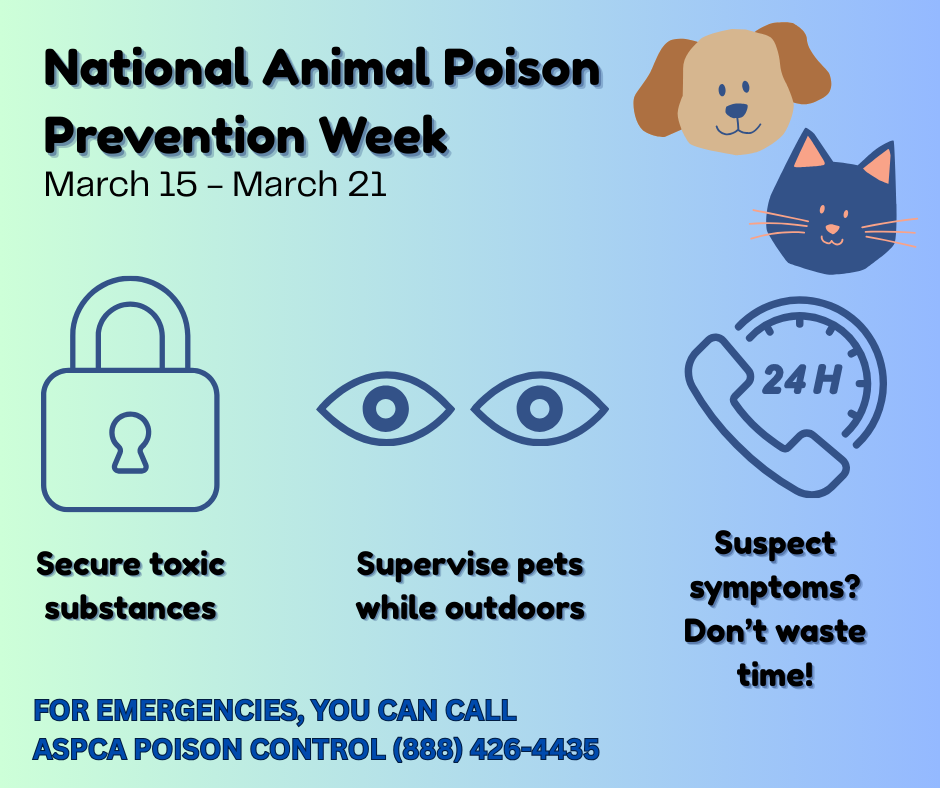
Here are some tips for poison prevention:
- Keep household cleaners and medications in intact containers in locked, high cabinets
- Keep human foods secured in pantries (Ex: chocolate, raisins/grapes, coffee beans, onions, alcohol, and anything with the artificial sweetener xylitol listed as an ingredient)
- Keep toxic houseplants (Ex: Daylilies, Tiger lilies) to pets out of reach or replace with safer alternatives (Click HERE for some examples!)
- Keep pets under supervision when they are outdoors or even in the garage, and pull them away from potential hazards
- Rat, cockroach, ant, or other pest bait
- Antifreeze, engine oil, or other automobile fluids
- Gardening supplies such as fertilizer
- Trash
- Keep the ASPCA or other pet poison control hotline somewhere where it is visible and in easy reach in case of an emergency, or if you suspect your pet has been poisoned
- If you notice abnormal behavior, vomiting, diarrhea, the presence of blood in any vomit and diarrhea, or change in appetite, do not hesitate to call. These are signs of poisoning and veterinary care is needed as soon as possible.
Source: Virginia-Maryland College of Veterinary Medicine (2023, March 1) 5 Poison Prevention Tips to Keep Your Pet Safe. https://vetmed.vt.edu/news/2023/pet-poison-prevention.html
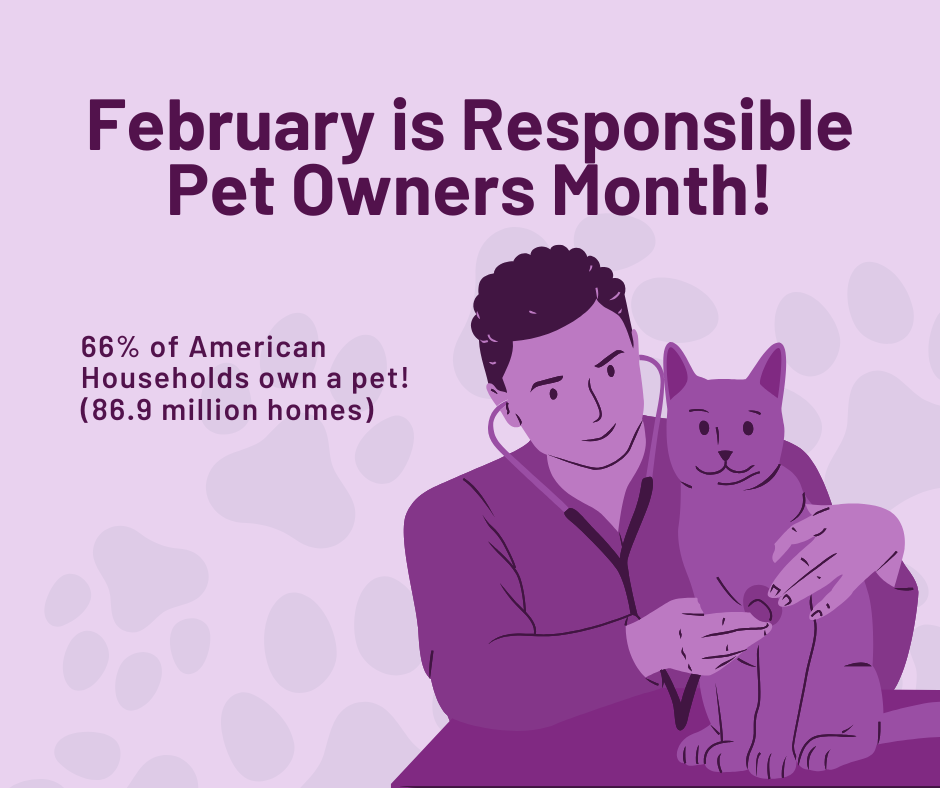
Read some interesting Pet Ownership statistics published by Forbes’ here. Some ways to observe Responsible Pet Owners month include: 1) Taking your pet to the vet at least once a year for preventative health measures- outside of bringing your pet to the vet when they are sick. 2) Feeding your pet a nutritious and controlled diet to help them live their best possible lives. 3) Pet-proofing your home to make sure that potentially-harmful hazards like household plants, cleaners, and foods are kept secure from your pet.